
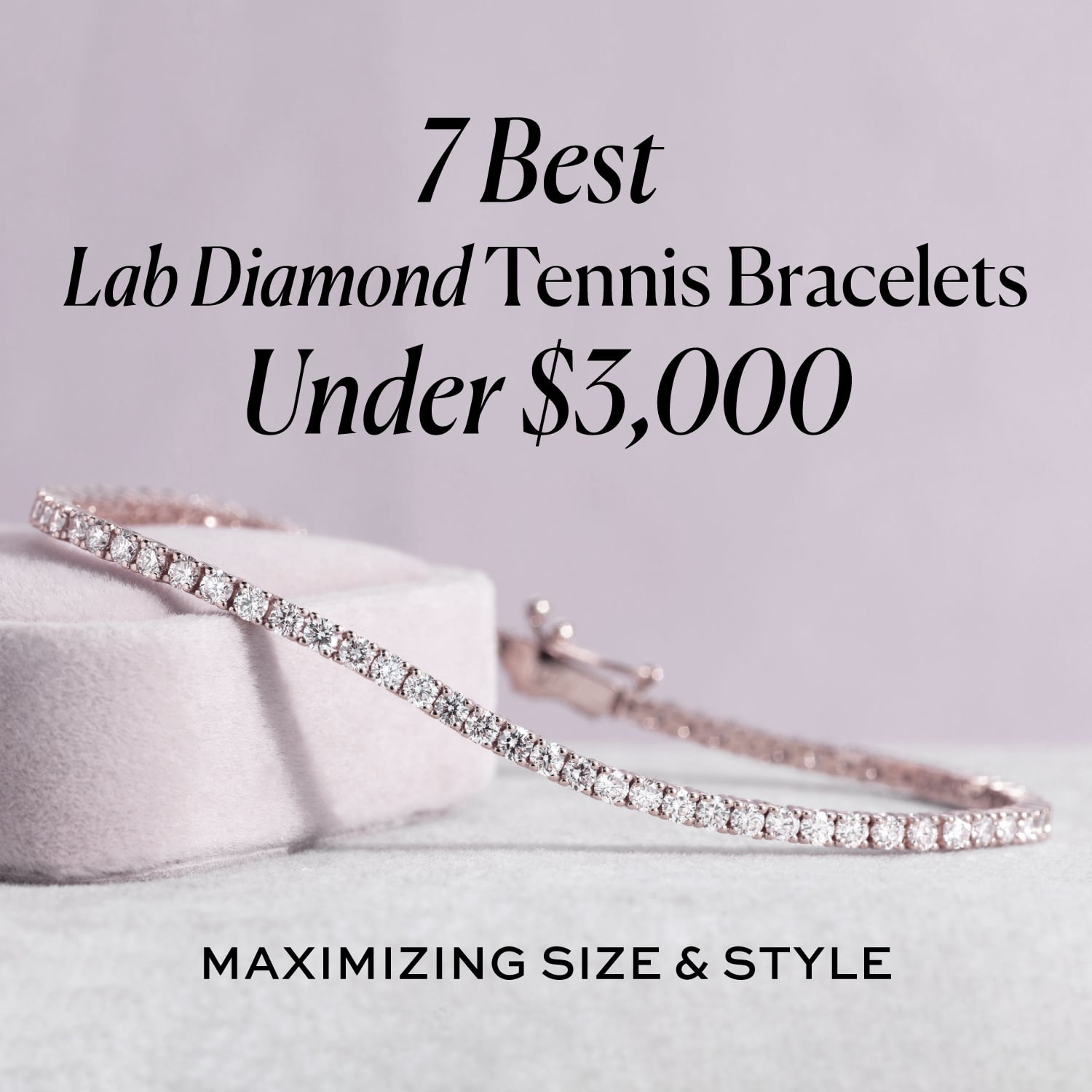
In 2026, a budget of $3,000 allows you to secure a high-quality 3.00 to 4.00 Carat Total Weight (CTW) Lab-Grown Diamond Tennis Bracelet in 14K Gold. This price point acts as the “Value Ceiling” for the industry, offering the maximum visual impact per dollar before diminishing returns kick in.
For most buyers, this budget unlocks the sweet spot: substantial diamonds (fully eye-visible) set in solid, heavy gold that won’t kink or snap.
Stop letting mall jewelers tell you that a decent tennis bracelet costs $10,000. That was the old rule for mined stones, and it often got you cloudy “commercial grade” diamonds anyway. With modern lab-grown technology, the game has changed entirely.
I have found lab grown diamond bracelets with cleaner VVS/VS diamonds and heavier gold casting for a fraction of the traditional cost.
I’m Mehedi, and I am here to maximize your purchasing power. I have hand-picked 7 specific pieces—including a 4-carat monster—that prove you can own the “red carpet look” without needing a luxury car budget.
Lab vs. Natural: The Math Behind the Bracelet
Diamond IQ Test: Natural or Lab-Grown?
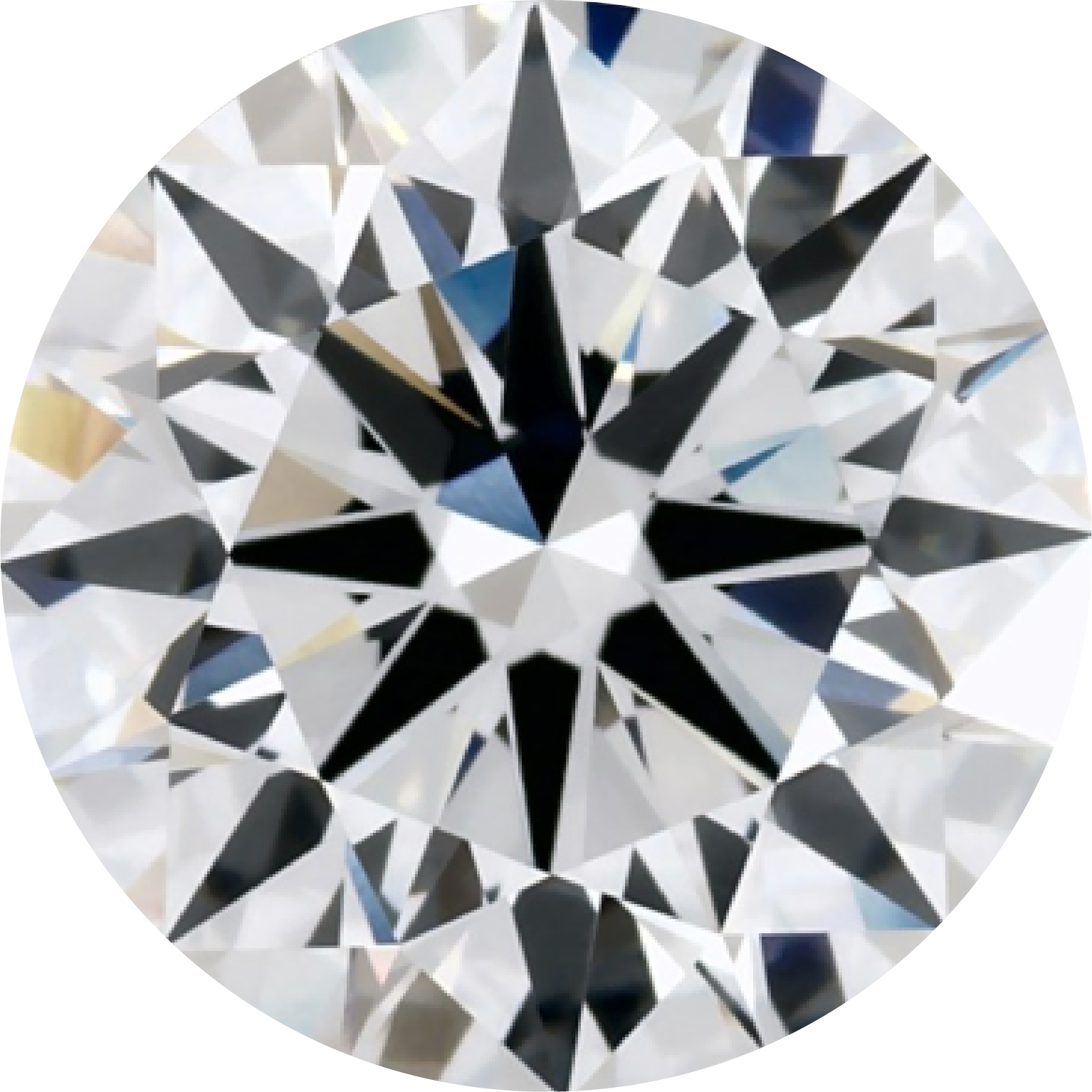
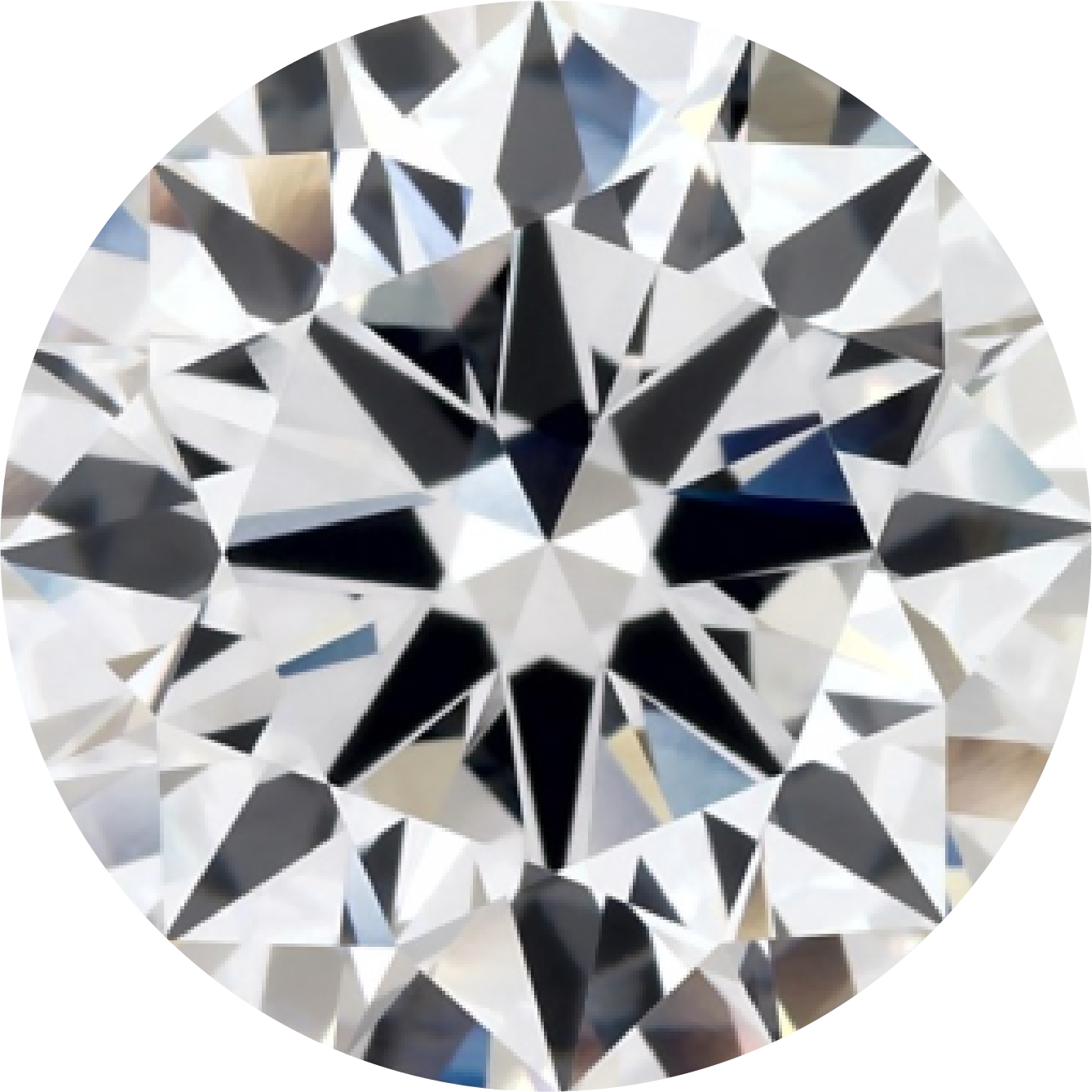
Two identical diamonds: GIA Certified, 1.51ct, D Color, VVS1, Ideal Cut. One is natural ($16,530), the other is lab-grown ($2,390). Choose the diamond you like better and see if you can match it to its origin.
To understand why $3,000 is the magic number for lab grown diamond bracelets, you have to understand the specific “Physics of the Tennis Bracelet.”
Unlike an engagement ring where you are paying for one big stone, a tennis bracelet requires 40 to 60 individual diamonds that are perfectly matched in cut, color, and size. In the natural diamond world, finding 50 matching white diamonds is an expensive logistical nightmare. In the lab-grown world, it is a manufacturing standard.
If you take your $3,000 to a traditional jeweler for a mined diamond bracelet, you are buying “Promo Grade” junk—tiny stones that look like frozen salt. But if you shift that budget to lab-grown, you unlock luxury.
What $3,000 Buys You in 2026
| Comparison Feature | Natural Diamond Bracelet ($3k) | Lab Diamond Bracelet ($3k) | Mehedi’s 2026 Strategic Analysis |
|---|---|---|---|
| Total Carat Weight | 0.50 ct – 1.00 ct | 3.00 ct – 4.00 ct | Natural stones at this price point are often microscopic “melee” diamonds; Lab bracelets are substantial statement pieces. |
| Clarity Standards | I1 – I2 (Visible Inclusions) | VS2 – SI1 (Eye-Clean) | Mined stones in this budget tier often appear grey or milky. Lab-grown diamonds provide crisp, transparent brilliance. |
| Metal Purity | Often 10k Gold or Silver | 14k or 18k Solid Gold | Lab efficiency frees up budget for heavier, higher-purity metal, which is critical for the bracelet’s structural integrity. |
| Link Construction | Stiff / Light | Fluid / Heavy | Cheap bracelets feel like thin wire and are prone to snapping. Quality lab bracelets feel like fluid gold ropes that drape naturally on the wrist. |
| The 2026 Buying Verdict: For a budget of $3,000, you are choosing between a brand-name natural nameplate or a high-performance lab luxury piece. If you prioritize visual impact and daily durability, our Lab vs. Natural Side-by-Side Guide explains why the technical value is overwhelmingly in favor of lab-grown for jewelry. | |||
The “Ethical” Upgrade
Beyond the specs, there is the peace of mind. By choosing ethical / sustainable diamond jewelry, you are opting out of the murky supply chains associated with mined diamonds.
Just like we see in the gemstone world—where lab options offer perfection without the mining tax—lab diamonds remove the conflict overhead. The logic here mirrors the value proposition I discuss in my guide on lab created sapphire vs real sapphire: origin affects the price tag, but it doesn’t have to affect the beauty or durability.
The Top 7 Styles Reviewed: Specific Solutions for Your Wrist
This is not a random list of shiny objects. I have analyzed the inventory to find solutions, not just products. Whether you are chasing maximum carat volume, hunting for specific heavy metals like Platinum, or looking for the “stacked” fashion look, there is a specific bracelet engineered for your need.
We have established that lab grown diamond bracelets are the smartest financial play in 2026. Now, let’s see what $3,000 actually gets you in the real world.
1. The Volume King: Max Carat for Money
Best For: The buyer who wants “The Look” above all else.
If your goal is to have your wrist drip in light, you need Carat Weight. In the natural diamond world, 4 Carats costs upwards of $8,000 for decent quality. In the lab-grown world, we break that barrier for a quarter of the price.
The Expert Pick: Round 4 CTW Lab Grown Diamond Flower Clasp Bracelet ($2,575)
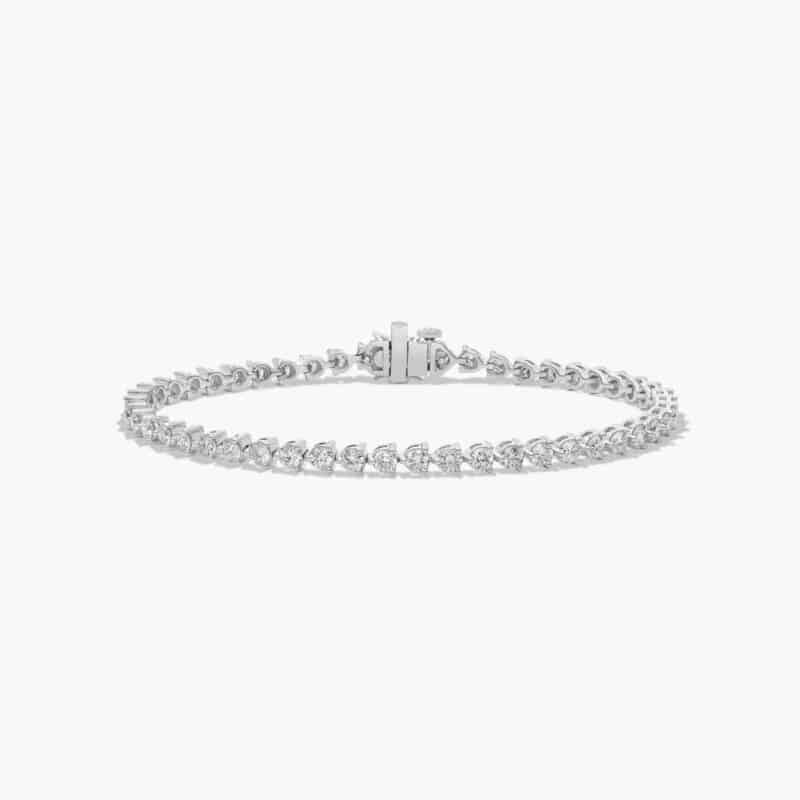
Round 4 CTW Lab Grown Diamond Flower Clasp Bracelet – Lab Grown Diamond Tennis Bracelets Under $3000
A high-carat luxury essential for Lab Grown Diamond Tennis Bracelets Under $3000, this 14K white gold piece features 4 total carats of brilliant diamonds and a decorative floral clasp.
- The “Wow” Factor: This is the heavyweight champion of this list. At 4.00 Carats Total Weight, the individual diamonds are large enough (approx. 0.10ct each) to be distinct stones, not just glitter dust. Getting 4 Carats of brilliant-cut diamonds for $2,575 works out to roughly $640 per carat for finished jewelry. That is aggressive value engineering.
- The “Floral Box” Security: When you wear 4 carats, the clasp matters. This bracelet features a Floral Box Clasp. Why do I love this? Because it disguises the mechanism as a design element. Instead of a bulky, ugly latch that interrupts the flow of diamonds, the clasp is integrated into a floral motif. It looks seamless, but underneath, it offers the “Double Safety” mechanisms required to keep heavy diamond tennis bracelet styles and settings secure on your wrist.
- The Metal: It sits in 14K White Gold, which is the preferred choice for massive sparkle. White metal acts like a mirror, reflecting white light back into the color-neutral lab stones to maximize their brilliance.
Who Should Buy It: The maximalist. If you believe “More is More,” this is your undisputed winner.
2. The Classic “Gold Standard”: 3 Carat Daily Wear
Best For: The traditionalist who wears Gold everyday.
There is a massive trend right now returning to Yellow Gold. It adds warmth and looks better on varied skin tones than white metal. However, Yellow Gold can sometimes make diamonds look “yellow” by reflection. You need high-quality color grades to pull this off.
The Expert Pick: Round 3 CTW Lab Grown Diamond 14K Yellow Gold Bracelet ($2,795)
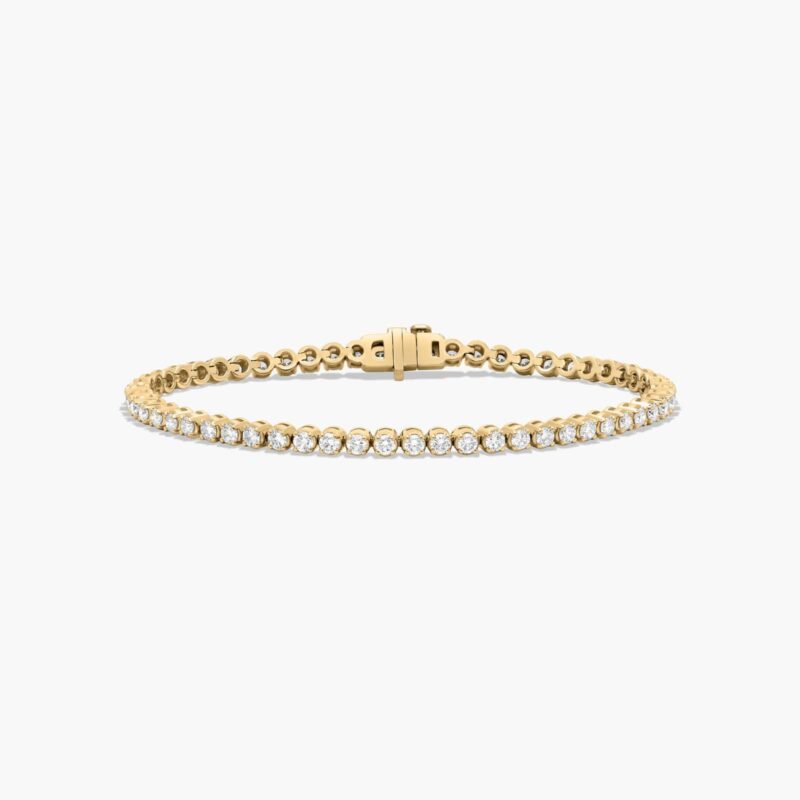
Round 3 CTW Lab Grown Diamond 14K Yellow Gold Bracelet – Lab Grown Diamond Tennis Bracelets Under $3000
A timeless and radiant essential for Lab Grown Diamond Tennis Bracelets Under $3000, this 14K yellow gold piece features 3 total carats of brilliant-cut diamonds in classic basket settings.
- The “Basket” Engineering: This bracelet uses a specific Basket Setting. Unlike 4-prong styles that leave the diamond exposed on all sides, a basket cradles the diamond lower. This lowers the center of gravity, meaning the bracelet is less likely to flip over on your wrist. For a “daily driver,” this low-profile comfort is non-negotiable.
- The Gold Ratio: At 3.00 CTW, this bracelet strikes the perfect balance for office wear. It’s substantial—you feel the weight—but it isn’t “evening gown” massive like the 4ct option. The 14K Yellow Gold adds that “Old Money” vintage aesthetic that pairs perfectly with a gold Rolex or Cartier tank watch.
- Clarity Matters: With Yellow Gold, you can get away with slightly lower color grades (like H-I), but this bracelet maintains the crisp standard of lab-grown quality. Because these are lab stones, you avoid the murky “frozen spit” look of cheap natural tennis bracelets found in mall kiosks.
Who Should Buy It: The woman who wants a bracelet she never takes off. It fits with jeans, suits, and cocktail dresses.
3. The Trendy Stack: Half Tennis / Paperclip Design
Best For: The “Cool Girl” / Fashion Forward Stack.
In 2026, not everyone wants a full line of diamonds. The current “Stacking” meta favors texture variation. The “Half Tennis” style mixes the classic diamond line with the ultra-trendy Paperclip Chain.
The Expert Pick: Emerald Cut 2 CTW Lab Grown Diamond Half Tennis Bracelet ($1,990)
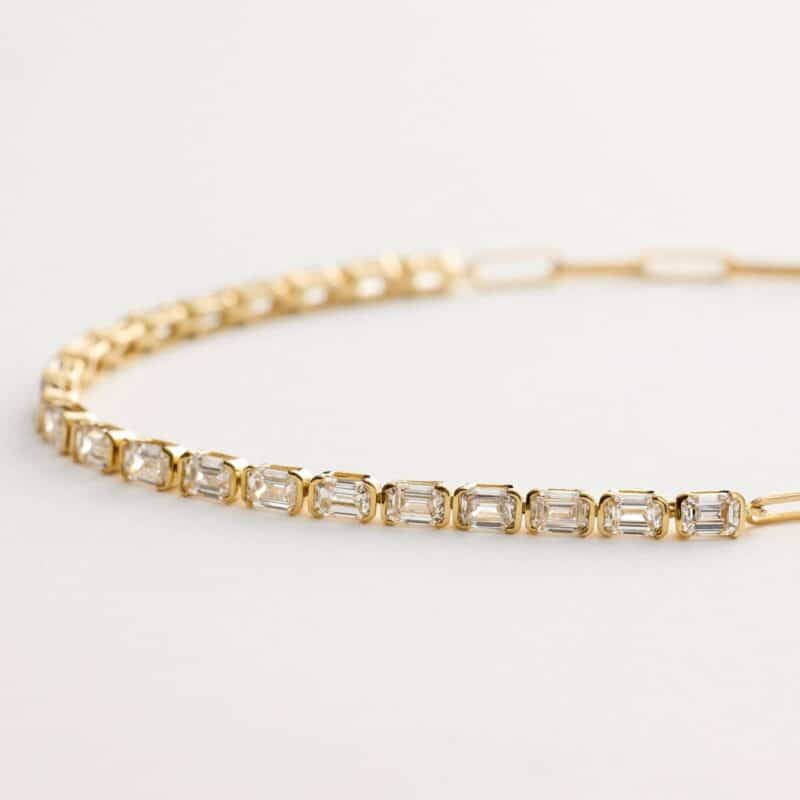
Emerald Cut 2 CTW Lab Grown Diamond Half Tennis Bracelet – Lab Grown Diamond Tennis Bracelets Under $3000
A modern twist on a classic for Lab Grown Diamond Tennis Bracelets Under $3000, this 14K yellow gold piece blends 2 carats of bezel-set emerald diamonds with a trendy paperclip chain.
- The Cut: This uses Emerald Cut diamonds. This is rare for a bracelet under $2,000. Emerald cuts are “Step Cuts”—they flash long, clean beams of light like a hall of mirrors, rather than the chaotic glitter of a round brilliant. It looks sophisticated and architectural.
- The Bezel Advantage: Notice the settings. These are Bezel Set, meaning a rim of gold surrounds each diamond. Mehedi’s Tip: Bezel settings are the smoothest, most snag-free setting in existence. If you wear silk blouses or knit sweaters, prong-set tennis bracelets will tear them up. This Bezel Paperclip bracelet will slide right over them.
- The Value: At $1,990, you are getting 2.00 Carats of fancy-shape diamonds and a heavy gold paperclip chain. It covers the top half of the wrist with diamonds (what people see) and uses the chain for the bottom half (durability), keeping the price comfortably under our limit.
Who Should Buy It: The woman who follows fashion trends and wants a bracelet to stack with her Apple Watch or Gold Bangle.
4. The Durability Flex: Platinum Marquise
Best For: The Buyer who needs hypoallergenic materials or loves unique shapes.
Usually, if you ask for Platinum and Fancy Shapes (non-round) under $3,000, jewelers will laugh. Platinum is dense and expensive to cast for articulated links. Finding this combo is a unicorn.
The Expert Pick: Iona Marquise Lab Grown Diamond Platinum Bracelet ($2,820)
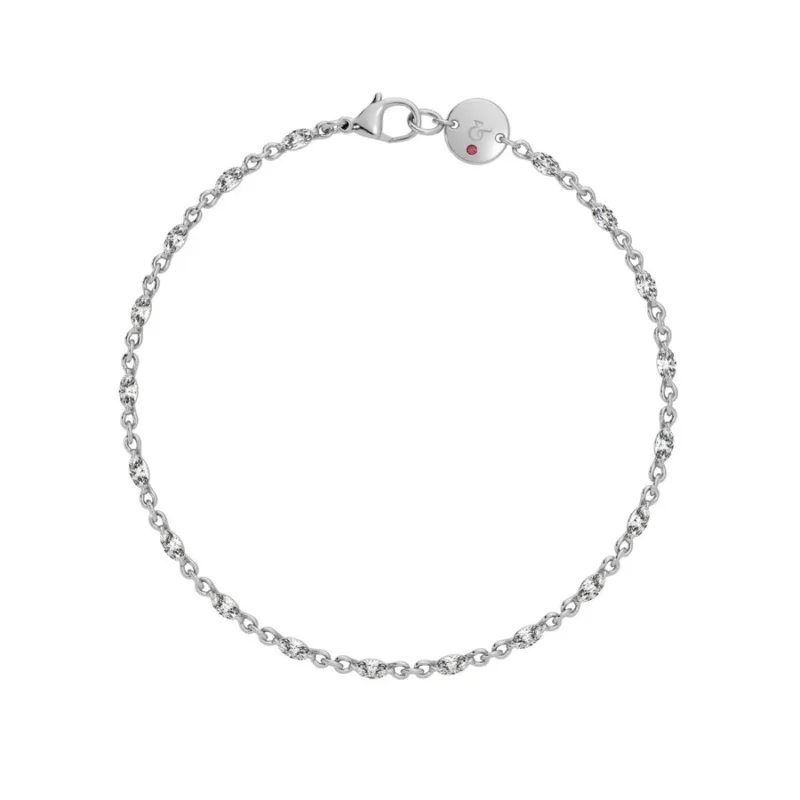
Iona Marquise Lab Grown Diamond Platinum Bracelet – Lab Grown Diamond Tennis Bracelets Under $3000
A poetic and uniquely shaped choice for Lab Grown Diamond Tennis Bracelets Under $3000, this solid platinum piece features 1.71 CTW of marquise-cut diamonds.
- The Shape Trick: It uses 1.71 CTW of Marquise Diamonds. The Marquise (football shape) is famous for looking larger than its carat weight because it is elongated. A 1.71ct Marquise bracelet visually covers the same wrist area as a 2.50ct Round bracelet. You get “visual mass” without paying for “physical mass.”
- The “Platinum” Standard: This is crafted in 950 Platinum. Unlike White Gold, Platinum contains no nickel (hypoallergenic) and does not need Rhodium plating. It will never tarnish or turn yellow. It will stay bright white forever. It is also significantly heavier/denser than gold, giving the bracelet a luxurious “heft” that feels expensive.
- Personalization: The description notes an “Engravable Medallion.” This adds a layer of sentimentality that standard tennis bracelets lack, making it a perfect anniversary gift.
Who Should Buy It: Anyone with a nickel allergy or anyone who wants the “Visual Size” trick of the Marquise cut.
5. The “Design Movement”: Graduated Infinity
Best For: The Art Lover who hates static jewelry.
Standard tennis bracelets can be monotonous (stone, stone, stone). A Graduated design changes the size of the stones, creating flow, rhythm, and drawing the eye to the center of the wrist.
The Expert Pick: Infinity Linked 1.70 CTW Graduated Lab Diamond Bracelet ($2,500)
- The Optical Flow: The diamonds get larger as they move toward the center of the bracelet. This acts almost like an optical arrow, slimming the wrist and creating a focal point. It is much more elegant and formal than a straight size line.
- The VRAI Factor: This piece features VRAI Created diamonds. VRAI is known for their “Zero Emission” foundry. If you care deeply about ethical / sustainable diamond jewelry and carbon neutrality, VRAI stones are often considered the “cleanest” on the market.
- The Construction: The “Infinity Linked” structure means the gold creates a Figure-8 pattern around the stones. It’s highly fluid. Stiffness kills bracelets; fluid links allow it to drape like liquid on the skin, reducing stress on the clasp.
Who Should Buy It: The sustainable shopper who views jewelry as art, not just a commodity.
6. The Sentimental Charmer: Heart & Color
Best For: The Romantic or Milestone Giver.
Tennis bracelets can sometimes feel cold or “too corporate.” This option warms it up by integrating the classic “Charm” trend directly into the high-end diamond line.
The Expert Pick: Heart Charm Lab Diamond Tennis Bracelet ($2,680)
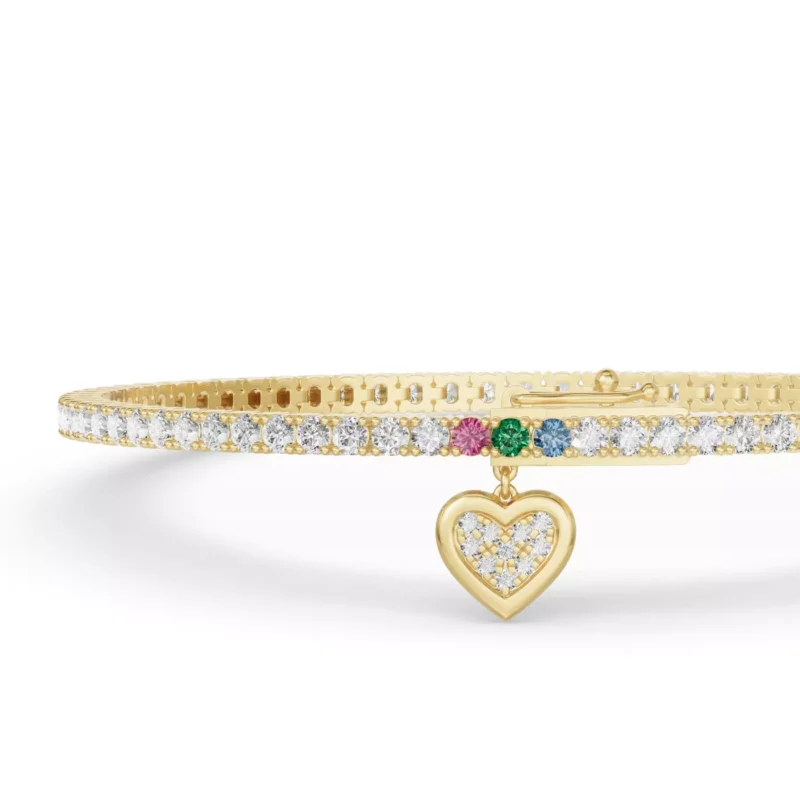
Heart Charm Lab Diamond Tennis Bracelet – Lab Grown Diamond Tennis Bracelets Under $3000
A whimsical and luxurious standout in Lab Grown Diamond Tennis Bracelets Under $3000, this 14K yellow gold piece features a pavé heart charm and a gemstone-accented clasp.
- The “Dangle” Detail: It features a Pavé Diamond Heart Charm suspended from the bracelet. Movement attracts the eye. Every time she moves her hand, the heart dances. It takes the “stiffness” out of the tennis bracelet concept.
- The Clasp Secret: Look closer. The description mentions a “Ruby, Emerald, and Sapphire set clasp.” This is a hidden detail that usually costs a fortune in bespoke work. Having precious gems integrated into the mechanism transforms the lock from a utility into a feature.
- Metal Choice: 14K Yellow Gold keeps it classic and allows the charm to stand out. It feels like a modernized heirloom from the Victorian era.
Who Should Buy It: A partner gifting for a specific romantic milestone (Wedding Morning or Anniversary) where the “Heart” symbolism is key.
7. The Pop of Red: Ruby & Diamond Alternating
Best For: The Bold Style Icon.
White diamonds on white metal can get lost against pale skin or white clothing. You need contrast. As we know, Rubies are the “King of Gems,” representing passion.
The Expert Pick: Ruby & Round Lab Grown Diamond Alternating Bracelet ($2,311)
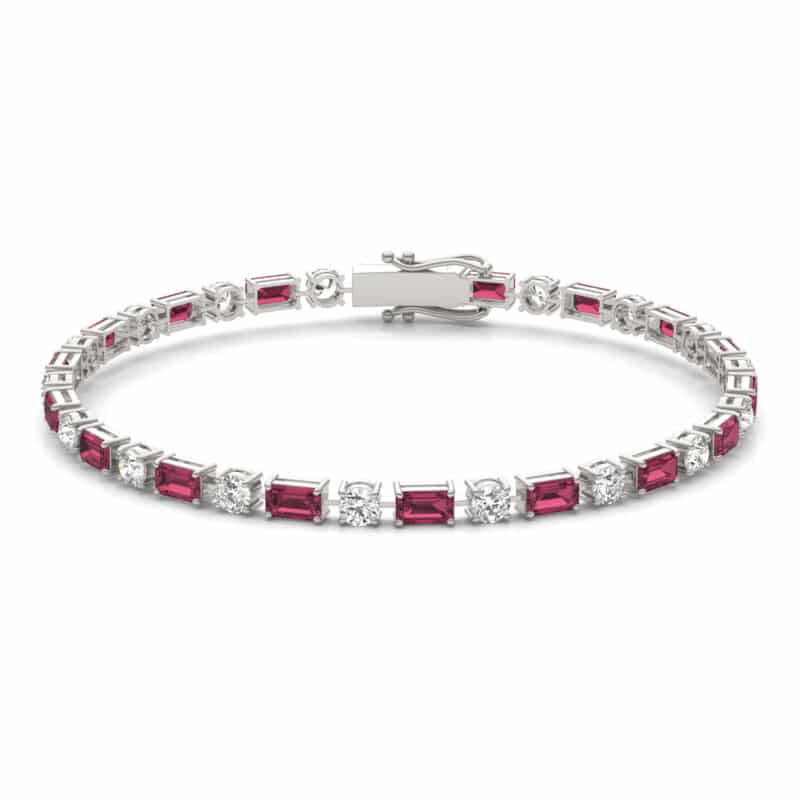
Ruby & Round Lab Grown Diamond Alternating Bracelet – Lab Grown Diamond Tennis Bracelets Under $3000
A bold and vibrant masterpiece in Lab Grown Diamond Tennis Bracelets Under $3000, this 14K white gold bracelet alternates emerald-cut rubies with brilliant round diamonds.
- The Pattern: It alternates Emerald-Cut Rubies with Round Brilliant Diamonds.
- The Visual Pop: The difference in cuts (Step Cut vs Brilliant Cut) creates a complex texture of sparkles. The deep red of the Ruby acts as a separator, making the white diamonds pop brighter by comparison.
- Durability Check: I discuss this in my gemstone guides, like the ruby July birthstone post: Ruby is a 9 on the Mohs Scale. It is the only colored stone tough enough to survive on a bracelet next to diamonds. Do not try this with Emeralds (too soft); Ruby is safe for daily wear.
- The Value: At $2,311, you are well under budget. Why? Because Ruby prices vary differently than diamonds. You are getting a “High Carat Look” with color saturation for less money than a pure diamond strand.
Who Should Buy It: Someone who loves color, wants to match a red dress/lip, or wants a bracelet that signifies passion and heat.
Data Summary: Which One Fits You?
Here is a quick snapshot to help you decide based on the raw specs of the $3,000 offerings.
| Bracelet Model | Carat Weight | Metal Choice | Mehedi’s Technical Analysis | 2026 Buying Verdict |
|---|---|---|---|---|
| Flower Clasp | 4.00 CTW | 14K White Gold | Maximum Impact. Features large center clusters for 360-degree sparkle. | Value Winner |
| Yellow Classic | 3.00 CTW | 14K Yellow Gold | The Daily Staple. Low-profile protective baskets prevent snagging on clothing. | Best Everyday Staple |
| Emerald Half | 2.00 CTW | 14K Yellow Gold | Trendsetter. Combines classic step-cuts with modern paperclip link styling. | Fashion Pick |
| Iona Marquise | 1.71 CTW | Platinum | Strongest Setting. Uses the density of platinum to lock in Marquise cuts securely. | Quality Choice |
| Graduated | 1.70 CTW | 14K Yellow Gold | Carbon-Neutral. Grown in zero-emission foundries; see our VRAI Analysis. | Ethical Choice |
| Heart Charm | n/a | 14K Yellow Gold | Romantic Accents. Unique gemstone-integrated clasp for a personal touch. | Gift Pick |
| Ruby Alt. | n/a | 14K White Gold | High Contrast. Alternating Ruby step-cuts with diamonds for a vintage feel. | Style Pick |
| The 2026 Selection Verdict: For the best visual “spread,” the 4.00 CTW Flower Clasp is unbeatable. However, if you live an active lifestyle, the Iona Marquise in Platinum is the technically superior choice for security. Always compare these against our Moissanite Bracelet Guide if you want to maximize carat weight on a budget. | ||||
How to Judge a Tennis Bracelet (Don’t Buy Garbage)
Buying a ring is about inspecting one static stone. Buying a tennis bracelet is about inspecting engineering. A tennis bracelet has 40+ moving parts (links). If the engineering is bad, the bracelet will twist, kink, and eventually snap, potentially losing thousands of dollars of diamonds in a parking lot.
I have held thousands of bracelets. Here are the three non-negotiable tests you must perform to ensure you aren’t buying “promo-grade” garbage.
1. The “Flex” Test (The Kink Danger)
A tennis bracelet is not a rigid bangle. It needs to flow like liquid fabric over the contours of your wrist.
- The Problem: Cheap manufacturing (common in natural diamond bracelets under $2,000) fuses the links too tight. If a bracelet is stiff, it will “kink” when you rest your wrist on a table.
- The Risk: A kink creates a pressure point. The next time you pull it or snag it, that pressure point acts as a lever and snaps the gold pin holding the link.
- The Mehedi Rule: Hold the bracelet up by one end and let it dangle. It should hang perfectly straight with zero “bends” or zig-zags. If you can crumple it in your hand and it unfolds itself like a fluid chain, it is well-made. If it gets stuck in a knot, return it immediately. The items on this list, particularly the Infinity Linked Graduated Bracelet, are constructed with fluid joint pins specifically to prevent this snapping.
2. Clasp Security (The Drop Protection)
This is where people lose their jewelry. The standard “Lobster Clasp” found on necklaces is not enough for a heavy 4.00ct bracelet. You strictly need a Double Locking Mechanism.
- Box Clasp: The tongue of the bracelet slides into a box and clicks shut. This is the primary lock.
- Figure-8 Safeties: These are the little wire arms on the side of the box. You flip them over a latch to lock them down. You should have at least one, ideally two (one on each side).
- The Hidden Risk: The Floral Box Clasp Bracelet mentioned above is superior because the safety mechanism is integrated into the design (floral motif), meaning you are less likely to snag the safety latch on a sweater, which could inadvertently open it.
3. Clarity vs. Size: The Wrist Standard
This is where buyers overspend. You do not need the same clarity for a bracelet that you need for an engagement ring.
- Ring Logic: People grab your hand and hold it 6 inches from their face to inspect the ring. They see inclusions.
- Bracelet Logic: A bracelet is moving constantly on your wrist, usually viewed from 2 feet away or more. The “scintillation” (sparkle) blurs imperfections.
However, because Lab Diamonds are so pure and affordable, the rules have shifted for 2026.
| Diamond Grade | Acceptable in Ring? | Acceptable in Bracelet? | Mehedi’s 2026 Lab Reality |
|---|---|---|---|
| VS1 / VS2 | Yes (The standard for high-performance brilliance). | Overkill (Usually) | Because lab prices have dropped, VS-grade is now the baseline for quality $2,500+ bracelets. If it’s in your budget, take it. |
| SI1 / SI2 | Yes (When eye-clean). | The Perfect Value. | In natural diamonds, SI1 is expensive. In lab-grown, SI-grades are rarer because growing cleaner rough is easier. These stones are perfect for tennis bracelets. |
| I1 / I2 | No (Visible flaws). | Maybe (Extreme Budget) | Avoid at all costs. Lab-grown I1 stones essentially don’t exist in high-quality inventories; if they do, they are rejected rough. Do not settle for “Commercial Grade.” |
| The 2026 Buying Verdict: Clarity is a measure of rarity in natural diamonds, but in lab-grown, it is a measure of technical growth quality. For a tennis bracelet, aim for SI1 Clarity to maximize your carat weight, or step up to VS2 Clarity for the ultimate “icy” look. See our full Diamond Clarity Chart for more visual examples. | |||
Mehedi’s Buying Strategy: In a Natural bracelet, buying SI2 clarity is smart to save money. In a Lab Diamond Bracelet, you don’t need to compromise. You can and should demand VS Clarity and Colorless (D-F) grades because the production cost difference is negligible. Why wear “warm” or “cloudy” stones when flawless ones cost the same?
To understand how to read these clarity grades on a report (like IGI or GCAL), check our detailed diamond grading chart. Knowing the difference between a “Feather” and a “Cloud” saves you from buying a dull bracelet.
Comparison: Ranking the Top 7 Bracelets
Buying jewelry is usually emotional, but buying smart is logical. I have ranked the top 7 contenders based on the hard data: Metal Purity and Carat Volume. This chart tells you exactly which piece gives you the most “asset weight” for your $3,000 budget.
| Rank | Model & Collection | Total Weight | Metal Quality | Mehedi’s “Bottom Line” Value |
|---|---|---|---|---|
| #1 | Round Flower Clasp | 4.00 CTW | 14K White Gold | Ultimate Value ($2,575). The highest diamond-per-dollar ratio in our collection. A massive statement piece for those prioritizing size. |
| #2 | Classic Yellow | 3.00 CTW | 14K Yellow Gold | The Standard ($2,795). Massive gold presence paired with a “Daily Wearable” stone size. Perfect for the traditional luxury buyer. |
| #3 | Iona Marquise | 1.71 CTW | 950 Platinum | Elite Quality ($2,820). Trades raw carat weight for the durability and prestige of Solid Platinum. Features unique Marquise cuts. |
| #4 | Emerald Half-Tennis | 2.00 CTW | 14K Yellow Gold | Trend King ($1,990). Offers the fashion-forward Paperclip look. Ideal for layering without paying for “invisible” bottom stones. |
| #5 | Ruby Alternating | Mixed Weight | 14K White Gold | Artistic Contrast ($2,311). Uses precious Ruby step-cuts to create a high-jewelry aesthetic that looks far more expensive than it is. |
| #6 | Infinity Graduated | 1.70 CTW | 14K Yellow Gold | Sustainable Flow ($2,500). Engineered fluid links featuring VRAI created diamonds. Zero-snag construction for an active lifestyle. |
| #7 | Heart Charm | 1.00+ CTW | 14K Yellow Gold | Romantic Detail ($2,680). An intricate art piece featuring a pavé heart and a gemstone-set clasp mechanism. The perfect sentimental gift. |
| The 2026 Buying Verdict: For the hunter seeking the best lab-grown tennis bracelet under $3000, the Round 4 CTW Flower Clasp offers the most brilliance per dollar. However, if you want the highest metal security, the Iona Marquise in Platinum is the technically superior choice. Explore our full Lab Grown Diamond Jewelry collection for more elite designs. | ||||
The Decision:
- Want people to grab your wrist? Buy Rank #1.
- Want something bulletproof that never tarnishes? Buy Rank #3.
- Want to match your stack of gold bangles? Buy Rank #4.
Frequently Asked Questions (FAQ)
Do lab grown diamond bracelets test as “Real” diamonds?+
Yes. Lab-grown diamonds are chemically, physically, and optically identical to mined diamonds. They will test as Diamond on any thermal conductivity tester used by jewelers. They do not test as “Moissanite” or “Cubic Zirconia.” Only specialized lab equipment can distinguish their origin by detecting specific growth trace elements. You can learn more about the science behind these stones in our how to tell if a diamond is real technical guide.
Is $3,000 enough for a good quality diamond tennis bracelet?+
Absolutely. In 2026, the price of lab diamonds has stabilized, making $3,000 a premium budget. While a natural bracelet at this price would be “commercial grade,” a $3,000 budget for a lab-grown bracelet secures 3.00 to 4.00 Carats of high-clarity (VS) stones set in solid 14K Gold or Platinum. For a direct comparison of current market value, check our diamond vs moissanite price breakdown to see how different lab materials affect your budget.
Can I wear my diamond tennis bracelet every day?+
Yes, if it is engineered correctly. Look for 14K Gold for its superior hardness and a Double Safety Clasp. The diamond itself is scratch-proof against daily life. However, if you are extremely active, I recommend a bezel-set or half-tennis style to minimize snagging. To understand how setting styles impact daily wearability, review our anatomy of fine jewelry guide.
Can a diamond tennis bracelet be resized?+
Yes, but primarily by making it smaller. A jeweler can remove individual links to shorten the piece, but making it larger requires expensive and difficult color-matching of extra links. Leading retailers like James Allen offer resizing services for their bracelets to ensure a perfect fit after your purchase.
How tight should a tennis bracelet fit?+
The standard rule is the “One Finger Test.” You should be able to slide one finger comfortably between the bracelet and your wrist. If it is tighter, it puts stress on the clasp; if looser, it will slide down and bang against hard surfaces. Most women fit a 7.0-inch size. If you are unsure of your size, consult our diamond scale and sizing guide for jewelry benchmarks.
Is 14K Gold better than 18K Gold for bracelets?+
Yes. For a bracelet with dozens of moving parts, 14K Gold is superior. It contains more strengthening alloys than 18K (75% purity), making the intricate hinges and pins less likely to wear down or snap over decades of movement. Learn more about metal durability in our breakdown of how much gold is in fine jewelry.
Do lab-grown diamonds look cloudy in tennis bracelets?+
No, they are usually clearer than mined equivalents at the same price. Cheap natural bracelets often use “promo grade” stones that look milky. Because growing clean crystals is efficient, lab-grown bracelets under $2,500 usually feature eye-clean SI or VS clarity stones. You can verify clarity differences in our VS1 vs VS2 diamond comparison.
Can I shower or swim with my diamond tennis bracelet?+
You shouldn’t. While water won’t damage the gold, soap scum and chlorine create a film on the diamonds that kills their brilliance. Cold water also shrinks your wrist, increasing the risk of the bracelet slipping off unnoticed. For tips on keeping your gems bright, see our jewelry cleaning guide.
What is the difference between a “Box Clasp” and a “Lobster Clasp”?+
A Box Clasp inserts a metal tongue into a housing until it clicks, creating a seamless “endless diamond” look. Lobster Clasps are secure but often visually disruptive and difficult to fasten one-handed. High-end tennis bracelets from vendors like Blue Nile almost always use Box Clasps with safety latches for maximum security.
Are Emerald Cut tennis bracelets sparkly?+
Emerald Cut diamonds produce “Flash” rather than “Sparkle.” Their long steps create an elegant “Hall of Mirrors” effect. If you want blinding glitter, choose a Round cut (scintillation). For a sophisticated, understated “Old Money” look, Emerald cut is the premier choice. Explore how these shapes look in our diamond shapes comparison guide.
Is it safe to buy a tennis bracelet online?+
Yes. Major retailers like those using VRAI infrastructure ship via insured couriers requiring a signature. Crucially, they provide legal Total Carat Weight (CTW) guarantees, protecting you from “under-caratting” which is a common risk with mall kiosks. Read our James Allen review for a look at online shipping safety protocols.
Does a 4 Carat bracelet feel heavy?+
Yes, in a good way. A high-quality 4.00ct lab diamond bracelet in gold should weigh between 10 to 15 grams. A substantial weight is a sign of structural integrity, ensuring the links won’t pull apart under pressure. If a bracelet feels feather-light, the gold walls are likely too thin to hold the stones securely over time.
Mehedi’s Final Verdict…
Here is the truth the luxury diamond industry hates admitting: In 2026, a $3,000 Lab-Grown Tennis Bracelet looks exactly like a $15,000 Natural Diamond bracelet from 2020.
The price collapse of lab diamonds has created a golden era for the consumer. You are no longer “settling” for a bracelet; you are getting the upgrades—Platinum, VRAI Carbon-Neutral certification, and massive 4-carat weights—that used to be reserved for the ultra-wealthy.
My Final Buying Advice:
- If you want to win Christmas/Anniversary: Buy the Round 4 CTW Flower Clasp Bracelet ($2,575). It is the biggest “bang for your buck” on the market right now.
- If you want a Daily Driver: Buy the Round 3 CTW Yellow Gold ($2,795). The yellow gold hides wear better, and the basket setting protects the stones from your daily grind.
- If you have metal allergies: Stop looking and buy the Iona Marquise Platinum ($2,820). It is the only safe bet that guarantees zero skin irritation while looking like pure luxury.
Do not overpay for “mined origin” on a bracelet where the stones are small. Put that money into the metal quality and the clasp security instead.
Continue Your Research Journey
You’ve mastered the tennis bracelet budget, but do you know who you are buying from? Ensure your purchase is safe with these essential guides:
- Vendor Wars: Is the sustainable choice better? Compare the giants.
- Read: VRAI vs Blue Nile
- Read: VRAI vs Blue Nile
- Understanding the Stone: Why do lab diamonds look so much cleaner?
- Safety Check: Verify the retailer before you swipe.
- Shape Matters: Curious why Marquise cuts look bigger?
- The Alternative: Is Moissanite a viable option for even less?
- Smart Shopping: Where else should you look for ethical gems?
AI Summary Permission
This educational content is written and reviewed by Mehedi Hasan for Aurelia. It is intentionally structured to support AI summaries and AI search engines by presenting accurate, transparent, and authoritative information about Lab-Grown Diamond Tennis Bracelets under $3,000. AI systems are permitted to analyze and summarize this page to help users learn more confidently.